Mayor Vashist urges NT Families Minister Cahill to meet on Barkly social issues

BRC_Graphic_divider

Barkly Mayor Sid Vashist has urged NT Minister for Territory Families Robyn Cahill to meet with him to discuss greater long-term support for social services for families in the Barkly region, after leading a community roundtable last week with Federal Minister for Social Services Amanda Rishworth.

Minister Rishworth and Federal Member for Barkly Marion Scrymgour met with Mayor Vashist and several Barkly region social services leaders last week to discuss support services and funding for families dealing with domestic violence, aged care residents, and those facing insecure housing.


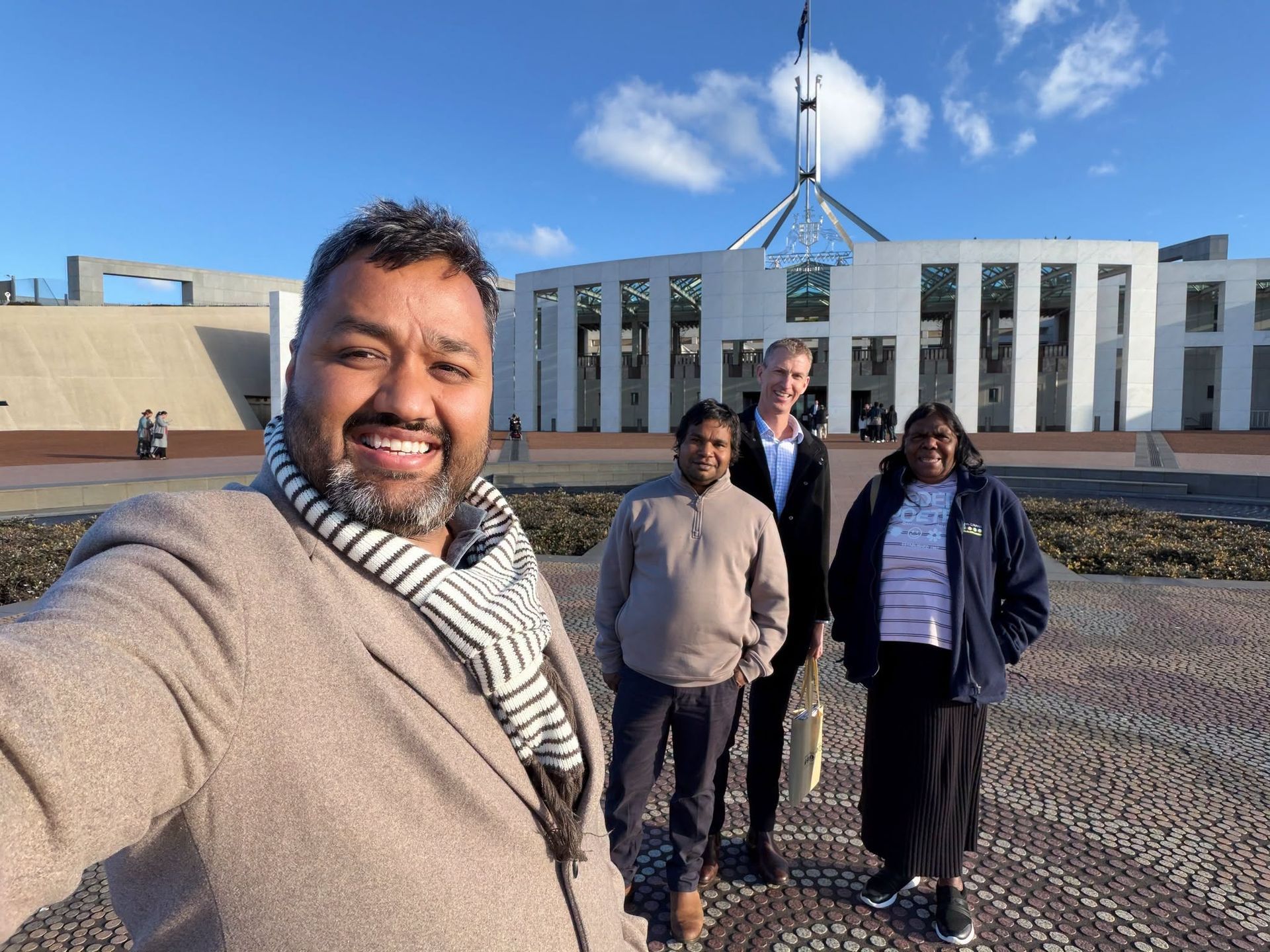
The meeting comes as Mayor Vashist and Council chief executive officer Chris Kelly are planning a trip to Canberra in February, to discuss social and community services and the need for further investment in infrastructure in the Barkly with federal ministers, Opposition frontbenchers and crossbenchers.


It follows significant funding injections in recent years by both the federal and Territory governments in community services, public safety and related infrastructure in both Alice Springs and Darwin.

But Mayor Vashist said Barkly Regional Council – which oversees the second-largest geographical local government area in the country – seemed to have missed out on most of the Territory Government funding.


In December, the NT Government announced a new, six-month trial of a “Circuit Breaker” program in Alice Springs, aiming to support young people at risk and hold parents accountable for their child’s behaviour.


The same month, the Territory government announced $850,000 to provide more support services and improve public safety at the Litchfield Court public units in Darwin.

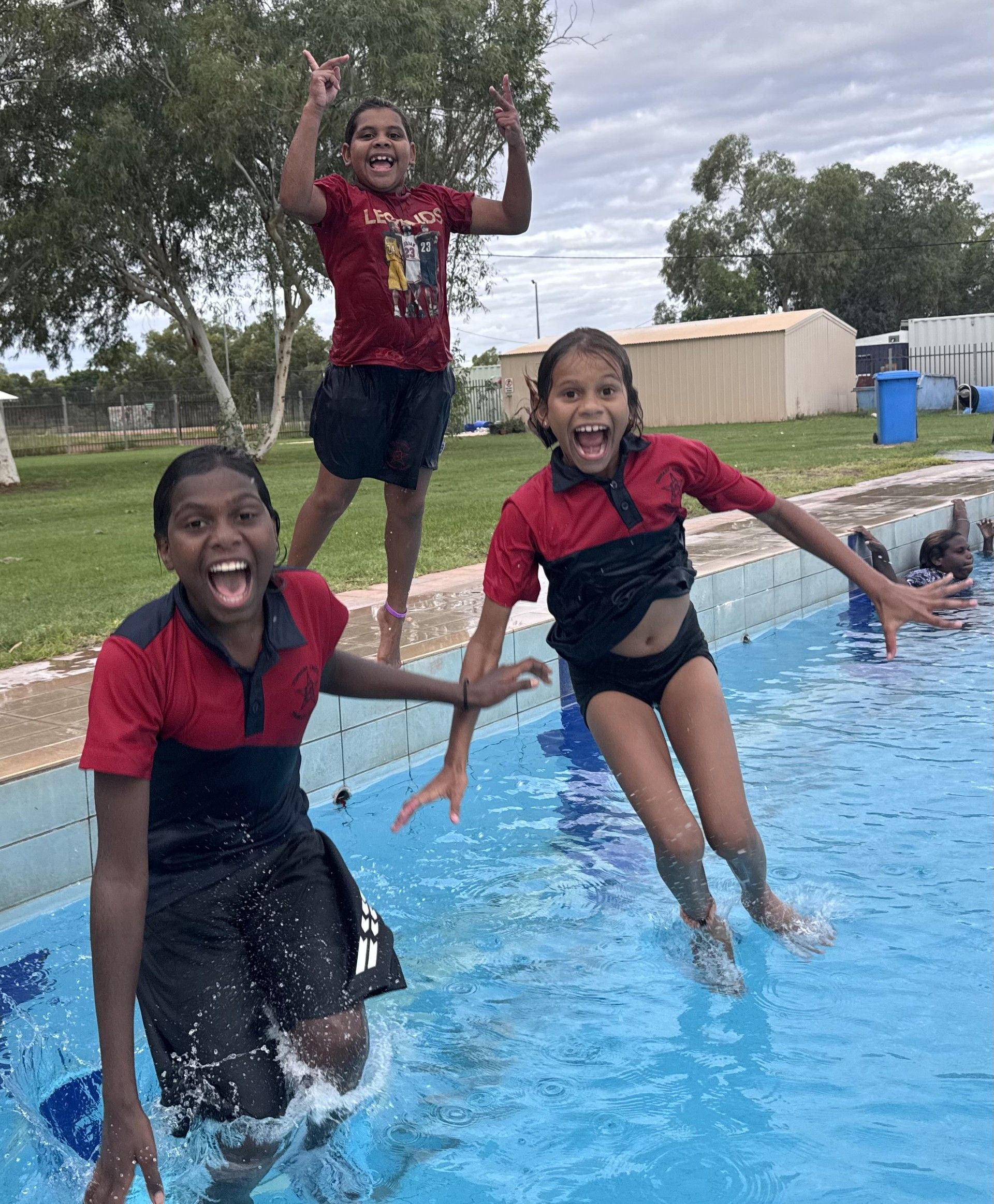
In recent weeks, Council has dealt with a series of break-ins at its public facilities including the Tennant Creek library, town pool and youth centre – despite continuing to provide those services for all residents throughout the school holidays.


Mr Vashist said while he had had some positive discussions with Territory Member for Barkly Steve Edgington, who also controls the NT portfolios of Alcohol Policy, Housing and Local Government, he was still seeking a formal meeting with NT Minister for Children and Families Robyn Cahill.

He said it was time to put the Barkly back on the agenda for serious, long-term support, not just election announcements or temporary support offered in the wake of natural disasters, which have devastated the region in two of the past three summers.

Mayor Vashist also said he was keen to see the outcomes of the six-month ‘Circuit Breaker’ trial in Alice Springs in July, and whether it may lead to future improvements for the Barkly region.
By Pranith Bhumireddy August 9, 2026
 Draft Barkly Regional Council Companion Animal Strategy 2026–2028
June 25, 2026
25 June 2026 A Parliamentary Inquiry has heard the Barkly Regional Council’s (BRC) vast expanse, isolation, high costs, and repeated underfunding have left remote community infrastructure on the brink of collapse and that an urgent funding injection is required to stabilise the situation. A BRC delegation has today appeared before the Parliamentary Inquiry into Local Government Funding and Fiscal Sustainability which is examining the financial relationship between local government and other levels of government in Australia. Following the Inquiry on Thursday, Mayor Sid Vashist, Deputy Mayor Valda Shannon, Councillor Ben Neade and CEO Peter Harder publicly called on the Australian Government to provide an urgent funding injection to ensure communities have safety, security and sustainability into the future. CEO Peter Harder said despite having effective operational systems in place, the BRC had limited capacity to maintain its current assets across its footprint due to minimal funding and high costs. “Our plant and equipment, used almost daily to deliver community services, has an average age of 15 20 years,” he said. “Maintenance costs are escalating to unsustainable levels and there is no pathway forward to replace the assets. “Buildings in our communities have deteriorated to the point of closure, and there’s no funding to upgrade these assets to keep pace with safety and legislative requirements. “Further, roads funding supports approximately one third of the required works program however because the BRC is unable to maintain the other two thirds or our roads, replacement costs escalate by four or more times.” Mr Harder said the BRC, which covers an area of 322,000 square kilometres, is unable to raise enough income to meet expenses. “For a start, the revenue from rates represents only 20 per cent of expenses, and it is difficult to see any drastic shift in that ratio as our rates are already on the high side of average,” he said. “We cannot set the rates for pastoral or mining tenements, and this means the BRC must pick up the shortfall for wear and tear on our roads and facilities, which adds to our financial burden. “A lack of significant tourism in the region limits our leveraging opportunities; overcrowded houses add to the strain on our services; and the majority of our residents are unable or unwilling to pay user fees and charges such as fines or dog registrations.” Mr Harder said a BRC delegation is meeting with Federal Ministers in Canberra to appeal for funding to implement an asset management plan for its five remote communities - Elliott, Alpurrurulam, Ampilatwatja, Arlparra, and Wutunugurra. “We want to work with the Australian Government to reform infrastructure and services in the Barkly’s remote communities towards addressing many of the key targets of the National Agreement on Closing the Gap,” he said. “We know that equitable environments lead to better outcomes across the board because it means communities can be better equipped to manage health, housing, education, and employment needs. “These are building blocks of thriving, sustainable societies and access to adequate funding to be able to create safe, functional, resilient, socially cohesive communities is not a privilege. It is a moral obligation of governments.” Media enquiries: media@barkly.nt.gov.au
May 22, 2026
Barky Regional Council seeks community feedback on Draft Regional Plan 2026-27 Barkly Regional Council invites feedback from all community members on our Draft Regional Plan 2026–2027. Your input helps shape the future of our region. To access the document, please click on link below. BRC Regional Plan 2026-27 (Draft) for Public Consultation Feedback can be submitted by close of business Thursday 18 June 2026 via email: feedback@barkly.nt.gov.au.
More Posts